2. Minutes 4–6: The Release, Name It Then Let It Go 🔥
Restart the timer for three minutes. Read your sentence aloud, once. Then a second time. Then a third. Genuinely aloud, even if you feel ridiculous — especially if you feel ridiculous, since the awkwardness is the sign that the sentence has touched something alive.
What happens there isn’t magic and is entirely concrete: a thing that has been named stops being a fog. As long as it stays in your head it occupies all the available volume. Spoken, it goes back to its real size, which is nearly always smaller than you thought.
Then part with the paper. Burn it if you have a safe place to do that, otherwise tear it into small pieces and throw them out — outside, not into your desk bin. The gesture matters more than its form. What you want is for the hand to do what the head has just said: the body records decisions far better than resolutions do.
One warning, because it comes up constantly. Do not try to forgive during these three minutes. Forgiveness, when it comes, comes afterwards — sometimes years afterwards. Forcing it here turns the ritual into an exercise in good behaviour, and good behaviour has never closed a chapter. You name, you release. That is all that is asked, and it is already a great deal.
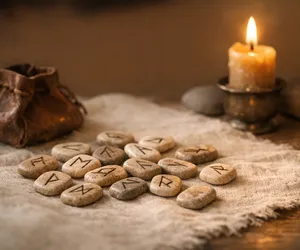
Some people like to set a stone beside them for this phase a quartz, an obsidian, whatever is to hand. It isn’t necessary. If you want to, crystals for abundance and protection and this guide to rock crystal give you some bearings; but a stone will not do the work for you, and its absence will not spoil anything.
3. Minutes 7–9: The Intention, One Sentence and Not a List ✍️
Fresh sheet. Three minutes left. You are going to write one sentence, in the present tense, saying what you are opening. Not what you hope for, not what you are asking for: what you are opening.
The present tense is the heart of the exercise. “I’d like to get my confidence back” places the thing out of reach and keeps it there. “I am rebuilding my confidence, one meeting at a time” puts it into the real world with a unit of measurement. The second sentence is testable by tomorrow; the first never will be.
One sentence, not a list. This is the hardest rule to hold and the most useful. A list of eight intentions is an elegant way of choosing none of them: it spreads attention until it stops working. If you are torn between three, ask which one would make the other two easier — it is usually that one.
Keep this sheet. Fold it, slip it into a book you open often, into a wallet, behind a picture frame. It doesn’t need to be seen daily; it needs to exist somewhere outside your head. That is the difference between an intention and a passing wish.
The Full Protocol: Nine Minutes, Timer Running 🕯️
1. Pick your hour and shut the world out. Evening works better than morning, because settling a day is easier than settling a night. Phone on airplane mode, door closed. Nine uninterrupted minutes is the one genuinely non-negotiable constraint here.
2. Prepare three things, not ten. Two sheets, a pen, a timer. A candle if you feel like it, a stone if you own one. (this birthstone guide says which does what) None of this gets bought for the occasion: a ritual that requires shopping is a ritual you won’t do.
3. Minutes 1–3 — the reckoning. One past-tense sentence about what has ended. Wait for the third minute: the true sentence arrives late.
4. Minutes 4–6 — the release. Read aloud three times, then part with the paper. Burn it or tear it, but get the sheet out of the room.
5. Minutes 7–9 — the intention. Fresh sheet, one present-tense sentence, handwritten. Fold it, put it away, and don’t reread it tonight.
6. Stop at the ninth minute. Even if you’re on a roll. Especially if you’re on a roll. The clean cut is part of the ritual: it says the matter has been dealt with and won’t be put back on the table before tomorrow.
7. Tell nobody about it for three days. Telling it is a highly efficient way of spending it. You can talk about it afterwards, if you still want to — and often the urge will have passed, which is rather a good sign.
After the ritual: the three days that count
The seventy-two hours that follow are the part almost everyone skips, which is a shame, because that is where the ritual earns its keep. You observe. You force nothing.
Expect a dip the next day. It is common and it is not a failure: naming an ending often brings up a sadness you had been holding at arm’s length for months. It usually passes in a day or two. If it settles in, treat that as a real signal — the last section of this article says who to talk to.
On the second day, note one thing: a gesture, however tiny, that moves in the direction of your sentence. A message sent, a file opened, an appointment booked. An intention isn’t measured by how it feels, it is measured by what you do within three days.
On the third day, reread your sentence. If it still rings true, put it away and leave it alone for a month. If it rings false, don’t patch it: redo the nine minutes at the next 9. A cobbled-together intention loses exactly what gave it its force.
Missed 9/9? The Next Doors of the Nine 🗓️
9/9 is the widest door of the year, not the only one. Every 9th of the month carries the same number, and the reduction confirms it: 9 stays 9 whatever month it falls in. Between now and the end of 2026 you have three appointments left.
Friday, October 9, 2026. The first one after the equinox, so the first properly autumnal one: this is the date I recommend to anyone wanting to settle the summer. Libra season asks for balanced accounts, and the autumn equinox has already done half the work by installing the tipping point.
Monday, November 9, 2026. A Monday, which suits a work-related intention nicely: the evening’s sentence gets tested first thing the next morning.
Wednesday, December 9, 2026. The last of the year and the most loaded symbolically: people often settle twelve months in one sitting. If you only do one, do this one — but carve out a real half hour of quiet around it, because December doesn’t hand out many.
And the next 9/9 will fall on Thursday, September 9, 2027. Note it now if this ritual served you: a yearly practice beats a perfect practice you never repeat.
The Three Mistakes That Ruin the Nine Minutes 🚫
First mistake: starting with the intention. By far the most common, and the one the ritual’s ordering exists to prevent. You arrive with a project in mind, you want to phrase it beautifully, and you dispatch the reckoning in thirty seconds to get to the enjoyable part. The result rarely survives the week. An intention laid over a chapter that is still open has nowhere to land: it hangs in the air, then it drops.
Second mistake: writing for someone. The moment a sentence is shaped to be read — by someone close, by an audience, by the version of yourself you would like to be — it becomes a speech. Speeches are built to persuade, not to decide. The test is simple: if your sentence would be postable as-is on social media, it is probably too tidy to be true.
Third mistake: repeating the ritual three nights running. When nine minutes have stirred something, the temptation to start again tomorrow and “finish the job” is strong. The opposite happens: close repetition turns an act of closure into organised rumination, and you reopen every evening what you had just closed. Wait for the next 9. The interval is part of the remedy.
A fourth, rarer but costlier: doing the ritual on a night when you are exhausted or have been drinking. Both lift the same filters, and what surfaces then isn’t truer, only harsher. Postpone by twenty-four hours: an ending deserves to be named by someone who is standing up.
What This Ritual Does Not Replace 💡
This needs saying plainly, because it is the limit of the genre. Nine minutes with a sheet of paper do not treat grief, depression, burnout or a violent breakup. This ritual is an act of clarification, not care.
9/9 belongs to a symbolic tradition: numerology is not a science and does not claim to be. What works here is documented and far simpler than any portal — writing by hand slows thinking down, saying something aloud gives it a size, setting a fixed duration stops rumination from settling in. The number 9 serves as the appointment. That is already a useful function, and there is no need to credit it with others.
If sadness settles in beyond a few days, if your sleep goes off, if the momentum doesn’t come back: talk to a healthcare professional. A ritual accompanies a crossing, it does not replace one, and no well-phrased intention substitutes for proper support.
Finally, don’t do this ritual on someone else’s behalf. You cannot settle a third party’s chapter, however good your intentions. You can send them this page; the rest is theirs. And if you are wondering what it means when a stone cracks mid-ritual, broken gemstones and their meaning answers that one.
❓ The 9/9 ritual: your questions answered
Can you do the 9/9 ritual outside September 9?
Yes, and that is the most common case. 9/9 concentrates the number by doubling it (9 + 9 = 18, then 1 + 8 = 9), but every 9th of the month carries the same closing energy. In 2026 you still have Friday October 9, Monday November 9 and Wednesday December 9. Failing that, any evening when you know a chapter is over will do: the date helps, it does not determine anything.
Why exactly nine minutes?
Two reasons. The first is symbolic: nine minutes for the number 9, in three phases of three. The second is practical, and it matters more: nine minutes is short enough that you will actually do it on a weeknight, and tight enough that you won’t slide into an hour of rumination. The duration protects as much as it structures.
Do I have to burn the paper, or can I tear it up?
Tearing is perfectly enough. What counts is physically parting with the sheet and getting it out of the room — throwing the pieces away outside rather than into your desk bin. If you do burn it, use a metal or ceramic container, away from any fabric, and never in a poorly ventilated room. No ritual is worth a house fire.
What if several chapters are ending at once?
Handle only one. It is counterintuitive and it is nonetheless the most useful rule here: a session that handles everything handles nothing. Pick the ending that would make the others simpler, and save the rest for the next 9. A practice repeated three times beats one marathon sitting.
Do I need a stone, a candle or incense for it to work?
No. Two sheets, a pen and a timer are enough. A candle helps some people mark the beginning and the end, a stone gives the eye something to settle on, but those are preferences, not conditions. A ritual that demands equipment you don’t own is a ritual you won’t do: that is its main cause of failure.
Can the 9/9 ritual replace therapy?
No, under no circumstances. Numerology belongs to a symbolic tradition with no scientific validation, and nine minutes of writing treat neither grief, nor depression, nor burnout. This ritual clarifies a decision and gives an intention a frame. If sadness settles in or sleep is disrupted over time, consulting a healthcare professional is the right move.
Does it still work if I don’t believe in numerology?
Yes, and that is worth saying plainly. Nothing in the protocol depends on your believing anything. Writing by hand slows thinking down, saying a sentence aloud gives it a size, and a fixed nine minutes stops the thought from turning into an evening of rumination — none of that requires faith in a number. The 9 simply supplies the appointment, and an appointment you keep beats an intention you admire. Plenty of people use this ritual as a purely practical writing exercise, and it works exactly the same.
Should I do it in the morning or in the evening?
The evening, in the large majority of cases. Settling a day is far easier than settling a night: by nightfall you have the material in hand, and the sentence about what has ended arrives more readily. The morning has one advantage, though — if you know you will be tempted to reread and rework your intention all evening, doing it early and then going to work puts a natural stop to the fiddling. Pick the slot you will actually protect.
Madison’s note: what I actually do with it 🌙
I have been doing this ritual for seven years, and I’ll be honest with you: I have missed the right moment more often than I have caught it. Some years September 9 went past without my noticing; other years I sat down on a November 9 at eleven at night, at the corner of a table, because the day had been long and something needed putting down.
What I eventually understood is that the middle sentence — the release one — is always the one I hadn’t planned to write. I sit down believing I know what is ending, and the third minute contradicts me every single time. It has become the only reason I keep going.
I promise you nothing. I am simply telling you that nine minutes and two sheets of paper cost very little, and that what they bring up usually deserves sitting down for.
Editor’s note: one sentence, and three daysDon’t try to settle everything at once. One ending, one intention, and three days to hold them. That’s it. The calendar will keep turning without asking our opinion; our share of the road is made of tiny, repeated gestures, and nobody can make those for you.
You know a chapter is over but you can’t name it? That is often the moment when an outside view saves you months. A psychic advisor knows how to ask the questions you avoid asking yourself, alone, at night, in front of a blank sheet. |
Numerology has never closed a chapter on anyone’s behalf. The 9 does not decide, it reminds: it puts an appointment in the calendar and leaves you entirely free to keep it or not. This 9/9 ritual will not change what has ended — but it can stop you from dragging a closed chapter around for another six months. Your free will stays intact, and that is precisely what gives weight to the sentence you will write.
Know someone circling the same ending for months without managing to say it? Send them this page before October 9. Nine minutes isn’t much to offer. ✨
Further reading:
Article written by Madison Carter, spiritual guide, specialist in crystal healing and intuitive practice.
















Did you like this article?
Want to know more 🤔 ?
Write directly to the authorMadisonCarter !
Ask Madison a question
Want to share your thoughts? Leave a comment