<link href="https://fonts.googleapis.com/css2?family=Inter:ital,opsz,wght@0,14..32,100..900;1,14..32,100..900&family=Nunito:ital,wght@0,200..1000;1,200..1000&family=Caveat&display=swap" rel="stylesheet" type="text/css" />

Mindful Walking in Winter Nature: A Grounding Practice

When the days get shorter and the year winds down, all you want is to stay warm indoors. What if you went out for a walk instead, slowly and mindfully? Frozen ground, breath you can see, low sunlight and bare trees become your anchors to find your roots again before the new year begins. 🌲

Last updated by Madison Carter

Mindful Walking in Winter Nature: A Grounding Practice

Before you lace up your boots, a card has a message for you 🔮

Draw a card from the tarot of the day and carry its message with you, step by step, on your winter walk.

On Monday, December 21, 2026, New York will get only about 9 hours and 15 minutes of daylight: it's the winter solstice, the shortest day of the year. Outside, the trees are bare, frost crunches underfoot and the sun barely clears the rooftops. Everything tells you to stay in. Yet this is exactly the right moment to head outside and walk, in a different way.

Mindful walking is mindfulness you practice with your feet: walking slowly, with nowhere to go, feeling every step, every breath, every sound. In winter, stripped-down nature helps you like no other season. Half an hour is enough to feel your roots again and close out the year with your feet on the ground, far from the holiday rush. Our spirituality guide is full of ways to reconnect, and this is one of the simplest. So how do you walk mindfully in winter nature to ground yourself?

When

During the day, December through February, ideally between 11 a.m. and 3 p.m.; Monday, December 21, 2026, the solstice, for a symbolic walk

Time needed

20 to 40 minutes

What you need

Sturdy, comfortable shoes, warm layers, a hat, gloves and your phone on silent

The 4 anchors of winter

Frozen ground · visible breath · short daylight · bare trees

The key gesture

Slowing down until you feel each step touch the earth

✦

Why Walk Mindfully in Nature in Winter? 🌲

Walking as meditation is an old practice. In Zen Buddhism, kinhin is a slow walk done between two periods of seated meditation, to carry the same state of mind into movement. The Vietnamese monk Thich Nhat Hanh made it one of the heart practices of his teaching: matching your steps to your breath and feeling the contact of each foot with the ground.

In Japan, the Forestry Agency gave a name to time spent immersed in the woods as early as 1982: shinrin-yoku, or “forest bathing,” coined on the model of sea bathing and sunbathing. And in 2015, researchers at Stanford University observed that people who walked for 90 minutes in a natural setting dwelled less on negative thoughts than those who took the same walk along a busy highway.

So where does winter come in? It's the season best suited to grounding, precisely because it has stripped everything away.

Read more

In spring and summer, nature overflows: colors, scents, birdsong, everything pulls your gaze outward. In winter, the landscape is laid bare. What's left is the earth, the cold, the light and the outlines of the trees. That little bit brings your attention back to the essentials: your feet, your breath, your body moving forward. That's exactly what a grounding practice is after, the movement that takes you down from your head to the ground, like a tree settling back onto its roots.

Mindfulness, as Jon Kabat-Zinn defines it, means paying attention in a particular way: on purpose, in the present moment and nonjudgmentally. A winter walk adds just one thing: the outside world, reduced to its essentials, keeping you company.

Sources: Wikipedia, “Kinhin”; Plum Village, Thich Nhat Hanh's teaching on walking meditation; shinrin-yoku, Portland Japanese Garden and Wikipedia, “Shinrin-yoku”; Bratman et al., PNAS, 2015; Jon Kabat-Zinn, Wherever You Go, There You Are, 1994.

✦

The 4 Anchors of Winter That Ground You ❄️

A mindful winter walk doesn't call for any objects. The season itself, at its harshest, provides the elements of the ritual. Here are the four anchors you'll lean on, and what each one awakens in you.

1. Frozen ground: feeling your roots 🌍

Grounding · from the first steps · the whole walk

In winter, the ground speaks up: it crackles with frost, squeaks under snow, gives way in the mud. Every step becomes a piece of information. This is the first anchor of the walk: feeling your heel land, your weight roll toward your toes, the earth holding you up. In the chakra tradition, it's the root chakra, at the base of the spine, that governs this rootedness: the feeling of being in your place, held by something greater than you.

Keep your shoes on: you can feel grounded through your soles just as well as barefoot, and frost is unforgiving.

2. Visible breath: the thread of the present 🌬️

Calm · with every breath · the whole walk

This is winter's own gift: in cold air, your breath becomes visible. That little cloud leaving you with every exhale is a cue summer never gives you. It makes concrete what teachers of walking meditation describe: matching your steps to your breathing. Thich Nhat Hanh invited walkers to gently coordinate breath and steps: a few steps on the in-breath, a few on the out-breath, without forcing, letting the rhythm come on its own.

Watching the mist fade is also watching what weighs on you drift away: a thought, an end-of-year worry. It appears, it dissolves, and you keep moving forward.

“Kiss the Earth with your feet.” - Thich Nhat Hanh

Source: Thich Nhat Hanh, “Walking Meditation,” Call Me by My True Names (Parallax Press), published by Plum Village.

3. Short daylight: walking toward it ☀️

Momentum · in the bright hours · for the length of the walk

At the solstice, daylight is scarce: about 9 hours and 15 minutes in New York. Walking in broad daylight means going out to find it where it is. The winter sun stays low on the horizon, its rays slanting in, golden even at noon: turn toward it for a moment, eyes closed, and let the warmth settle on your face. It's the same light celebrated at Yule, on the solstice: from there, it can only return.

If you feel your drive fading along with the days, this moment of light is yours. Crystals have a part to play too: see which stones keep you moving when the days get darker.

4. Bare trees: a promise lying dormant 🌳

Trust · halfway through · a few minutes' pause

A bare tree isn't a dead tree. Look at the tips of its branches: next spring's buds are already there. They formed during the summer, and waxy scales protect them from frost all winter long. Better still, it's the cold itself, as it builds up, that readies the tree to wake up. The Tree of Life, a symbol of the bond between earth and sky, takes on its full meaning here.

This is winter's message for your year's end: what looks still is preparing its renewal. During your walk, choose a tree and spend a few moments with it.

Sources: Musée de la biodiversité du Québec, “Les bourgeons : clés de la croissance printanière”; French National Forests Office (ONF), “Quelle est l'influence de l'hiver sur l'arbre ?”

✦

✨ SPIRITUAL JOURNEY

Elevate your spiritual consciousness 🌿

👉 Connect with guides & sacred tools →

Madison Carter
👼 ANGELIC EXPERT

Madison Carter

Angel Guidance Specialist

  • Divine messages & angelic wisdom
  • Spiritual awakening guidance
  • Higher consciousness connection
$5.00
$1.99
New client offer
👉 Connect now
🔮 DIVINATION

🔮 Annual Tarot 2026

  • 13-card spiritual revelation
  • Deep mystical insights for 2026
  • Downloadable sacred guidance
$9.90
$4.95
Save $4.95
👉 Unlock the cards
Imani
🔮 ENERGY HEALER

Imani

Psychic & Spiritual Healer

  • Energy healing & cleansing
  • Spiritual protection rituals
  • Pet communication & bonds
$5.00
$1.99
New client offer
👉 Connect now
🎁 FREE

🌙 Lunar Calendar 2026

  • Sacred moon phase tracking
  • Spiritual ritual timing guide
  • Manifestation power dates
FREE
👉 Download now
Nico de Castel
🌟 INTUITIVE GUIDE

Nico de Castel

Spiritual Life Coach

  • Intuitive spiritual coaching
  • Life purpose alignment
  • Soul mission guidance
$5.00
$1.99
New client offer
👉 Connect now
🎁 FREE

♻️ 2026 Retrograde Guide

  • Navigate planetary retrogrades
  • Cosmic timing for spiritual work
  • Essential celestial reference
FREE
👉 Download now

🌿 Embrace your spiritual journey with expert guidance & sacred tools

How to Take a Mindful Winter Walk, Step by Step

Allow 20 to 40 minutes, during the day, in a park, in the woods or on a trail you know. Pace matters more than distance: you may cover less than a mile, and that's just fine.

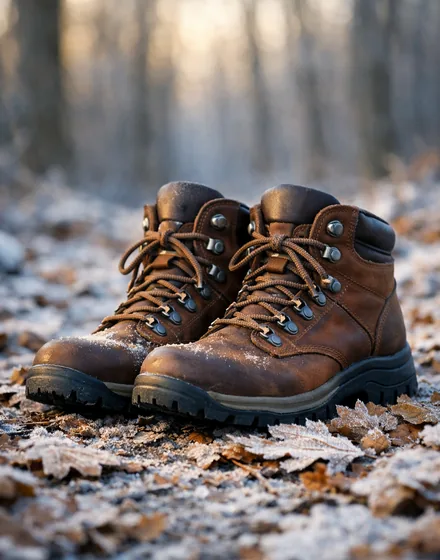
Hiking boots on a frosty forest path among fallen leaves in winter

1. Choose your path and your time. A nearby place you know, with earth and trees: a park will do. Go out during the brightest hours, between 11 a.m. and 3 p.m., and put your phone on silent, deep in a pocket.

2. Pause at the threshold. At the start of the path, standing still, take three slow breaths. Set a simple intention, in a low voice or silently: “I am here, now, and I let the earth carry me.”

3. Plant your feet. Stand for a minute without moving, feet hip-width apart. Feel the ground under your soles, your body's weight sinking down, the cold rising up. Picture roots growing from your heels and reaching down into the frozen earth.

4. Match your steps to your breath. Start walking twice as slowly as usual. Two or three steps on the in-breath, two or three on the out-breath. Watch your breath take shape in the cold air. When your mind wanders off to your holiday to-do lists, simply come back to your feet, without judging yourself.

5. Open your senses, one by one. Listen: count five different sounds (a bird, the wind, your footsteps, a branch, a distant noise). Feel the cold on your cheeks, your hands inside your gloves. Breathe in the smell of damp earth or wood. Look at the colors winter keeps: bark, moss, berries, sky.

6. Go and meet a tree. Halfway through, stop in front of a bare tree that draws you in. Look for its buds, lay your hand on its bark, raise your eyes to its branches. Silently tell it what you want to let rest this winter and what you hope to see bloom in spring.

7. Find your own pace again. Head back, letting your stride return to normal little by little, while staying in touch with the ground. Notice what has changed: your breathing, your shoulders, the noise in your head.

8. Close at the threshold. Back where you started, stop one last time. Thank the earth for its support, the tree for listening, the light for its warmth. When you get home, write down a single word for how you feel: it's the keepsake of your walk.

👉 Dress in layers, head home before dark, stick to paths you know and tell someone where you're going; on icy, bitterly cold or very windy days, keep the walk short.

✦

After the Walk: The Three Days That Matter

What you notice

Your sleep, your mood, the thoughts that come back or go quiet. A clear idea that pops up, an encounter, a bird crossing your path: these are often the little signs from the Universe we miss when we walk too fast.

What you don't force

Don't try to repeat the exact same walk or chase the same feeling. Some days your mind stays restless: that's normal, the walk has still done its work.

When to go again

Once a week, until the first buds of March, going back to the same tree if you can. You'll watch it change along with you.

You can keep a record of your walks in a notebook: the date, the weather, your word on coming home. Over the winter, those few lines sketch out your own inner season. And if you're looking for other simple ways to take care of your energy every day, try these habits that raise your vibration.

Over my years of practice, it was in winter that I really learned to walk: the day I heard my steps crunch on the frost and saw my breath dancing in front of me, I understood I needed nothing else to come back to myself. This walk won't travel the road for you, and you remain free to choose tomorrow's step. But the earth holds you up at every moment: do your part of the journey, and the Universe will do its part.

✦

What This Walk Doesn't Replace

Mindful walking supports your balance: it doesn't heal. If you're going through fatigue that has lasted more than a few weeks, sadness that won't lift or exhaustion, talk to your doctor or a therapist. And if you have a heart or breathing condition, ask your doctor before taking long walks in the cold.

✦

Your Questions About Mindful Winter Walking

What is mindful walking?

It's a slow walk, with no distance or speed goal, during which you bring all your attention to your steps, your breathing and your sensations. It comes from Buddhist walking meditation, the kinhin of Zen, which Thich Nhat Hanh brought to the West.

How long should you walk to feel grounded?

20 to 40 minutes is enough. Pace matters more than duration: you need time to slow down, about five minutes, and then time to stay in that slowness. A short, regular walk once a week is worth more than a single long hike.

Can you do a mindful walk in the city?

Yes, in a park, a public garden or along a river: what matters is having a bit of earth and a few trees. Even a tree-lined street, at a quiet time of day, can be enough to get started.

How is it different from forest bathing?

Forest bathing, or shinrin-yoku, is an immersion in the woods where you soak up the atmosphere of the trees, often without walking much. Mindful walking focuses on your steps and your breath. In winter, the two meet: you move slowly and stop beside the trees.

What if it rains or snows?

Light rain or a gentle snowfall makes the walk even more sensory: muffled sounds, the smell of earth, snowflakes on your face. In icy conditions, storms or extreme cold, though, be careful: shorten the walk or save it for a milder day.

Key Takeaways 📌

  • By day, in winter: 20 to 40 minutes during the bright hours, from the December 21 solstice until spring.
  • Four anchors: frozen ground, visible breath, short daylight and bare trees.
  • The gesture: slow down until you feel each step touch the earth, two or three steps per breath.

Our editors' take: finding your roots at year's end

A winter walk helps you come back to yourself before stepping into the new year. If you'd like to understand what is uprooting you right now or find the practice that suits you, a psychic advisor can help you adapt this ritual to your situation.

Talk to a spiritual advisor

✦ ✦

Find similar articles on this topic :

Madison Carter

Article presented by
Madison Carter

"Psychic Healer & Angelic Channel for MyAstro ✨ As a psychic healer and angelic channel, I translate loving guidance from the divine into practical wisdom. My work is dedicated to delivering messages from guardian angels that bring clarity, comfort, and deep spiritual healing. Through MyAstro, I aim..."

Read on

Get Clarity & Peace of Mind - Personal Guidance for Just $1.99

The heartache, Whether you're facing sleepness nights, seeking answers, or simply need a fresh perspective - our trusted advisors and editors are here to help. Share your questions and receive guidance to your situation.

Madison Carter

Madison Carter

✨ Angel Readings & Healer

  Ask Madison   
Susan Taylor

Susan Taylor

Astrology and Horoscope

  Ask Susan
Ava of Light

Ava of Light

🔮 Tarot and Love Advice

  Ask Ava
Imani

Imani

Pet Psychic and Dreams

  Ask Imani

Other Spirituality Related Articles:

Honor Your Scars: Healing Without Erasing What Shaped You 🌿

When the year winds down, it's tempting to turn the page and wipe everything clean. This ritual invites you to do the opposite: look at your old scars, on your body and in your heart, and honor them as the memory of everything you've been through. Four simple gestures, inspired by the Japanese art of kintsugi.

Soul Burnout: The Signs and How to Find Your Spark Again

You sleep, you rest, and still nothing comes back: not the drive, not the joy of little things. It isn't your body that's running on empty, it's your spark. Here are the signs of soul burnout, what it's trying to tell you, and the simple daily steps that help you find, little by little, what lights you up.

Forget Resolutions: How to Choose Your Word of the Year ✍️

A list of resolutions snaps at the first slip. A single word bends without breaking. Here's how to find yours on your own: the four questions to ask yourself between Christmas and January, how to sort the candidates, the test that settles the finalists, and where to keep your word so it stays with you all year.

What color to wear for New Year's Eve to start 2027 right?

Who hasn't experienced that moment of panic in front of their closet, just a few hours before New Year's Eve? Those long minutes spent scrutinizing your clothes wondering "What on earth am I going to wear?" 😅 Don't worry anymore: this year, I'm here to help you choose the perfect outfit that will not only flatter you but also attract all the good energies for 2027!

How to Bring Spirituality Into Your 2027 Resolutions

Lose weight, exercise more, less screen time... and by February, the list is gathering dust in a drawer. What if your resolutions were simply missing roots? Here is the ritual that ties each one to what truly matters to you, then turns it into a small daily gesture, to be done on New Year's Eve or at the first New Moon of 2027.

Yule: How to Celebrate the Magic of the Winter Solstice?

Yule is the festival of the longest night and the return of the light. Inherited from the Germanic peoples and revived by Wicca, it is celebrated at the winter solstice, on December 21 in 2026. Here is what it means, its symbols and a simple ritual you can do at home that evening. 🕯️

2026 Box
Readings
Newsletter
Draws and Games