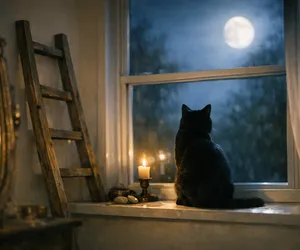
We don’t think of ourselves as superstitious, yet we hesitate when a black cat crosses the street, avoid walking under a ladder, knock on wood. These age-old gestures travel from one country to another.
Turkish nazar, Spanish grapes, the number 4 in Japan: here are the world’s superstitions, and what they say about us.
✦
14 superstitions from around the world
Every culture has its protective gestures and its taboos. A world tour of the most widespread:
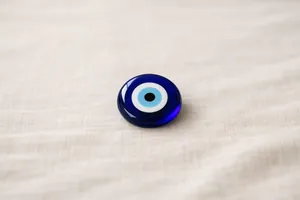
The nazar
Turkey
This little blue eye wards off the evil eye, the envious gaze that can harm people and belongings. It hangs at house entrances, on babies’ clothes, even from car mirrors.
Never hand over scissors
Turkey
Passing scissors from hand to hand would start a quarrel: you put them down, and the other person picks them up.
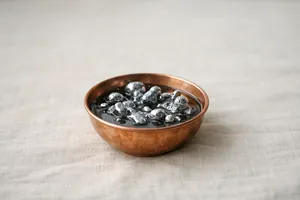
Kurşun dökme
Turkey
Molten lead is poured into a bowl of water held above the head: its shapes are read, and the ritual lifts negative energy. It is still practiced all over Anatolia.
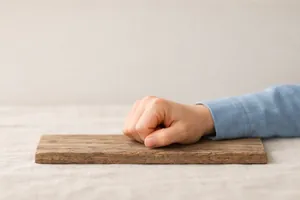
Knock on wood
Europe
Ancient peoples believed trees, especially oaks, sheltered protective spirits: knocking on wood keeps bad luck away after an overconfident word.
The 12 grapes of midnight
Spain
On December 31, one grape is eaten at each of the twelve strokes of midnight: a month of luck for each grape.
The number 17
Italy
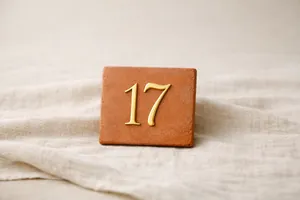
Written in Roman numerals, XVII is an anagram of VIXI, “I have lived”: in Italy it is 17, not 13, that brings bad luck.
The number 4
Japan
It is pronounced shi, like the word for “death”: many buildings have no fourth floor.
The number 8
China
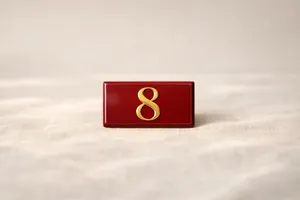
Its name sounds like “prosperity”: 8 is so sought after that the Beijing Olympics opened on 8/8/2008 at 8:08 pm.
Sit before leaving
Russia
Before a journey, the whole family sits for a moment in silence on the suitcases: the trip will be safe and the return happy.
No early birthday wishes
Germany
Celebrating someone before the day itself tempts fate: people wait until midnight.
The bag on the floor
Brazil
Putting your handbag on the floor makes money run away: hang it up or keep it on your lap.
The bride’s bouquet
Europe
In the Middle Ages, guests tore at the bride’s lucky dress; the custom became the bouquet tossed to single guests. Whoever catches it marries within the year.
Wishing on a shooting star
Antiquity
For Ptolemy, a shooting star meant a god was looking down at Earth: a wish made at that moment was granted.
A coin in the fountain
Rome and the Celts
Tossing a coin into water appeased the gods; today we do it for luck, or to be sure to return.
✦ ✦



















Did you like this article?
Want to know more 🤔 ?
Write directly to the authorMadisonCarter !
Ask Madison a question