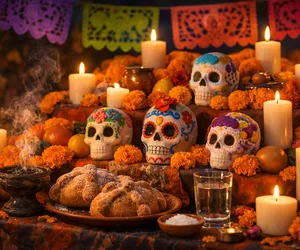
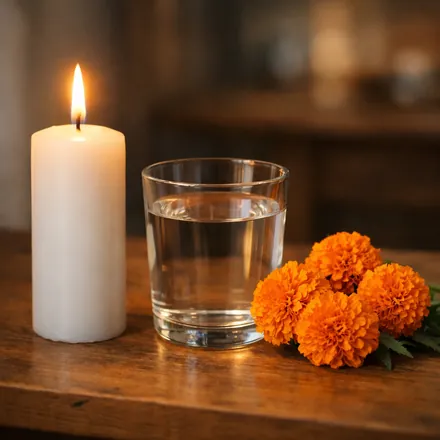
In Mexico, death isn't kept at arm's length: it gets a seat at the table. Every year, at the end of October, families cover graves with flowers, light candles and cook their loved ones' favorite dishes, certain that the departed come home to visit for one night.
It isn't Halloween, and it isn't Samhain either, even though the dates are close. Where does this celebration come from, what goes on the altar, and what do its symbols mean?
✦
What are the origins of Día de los Muertos?
Its roots reach back to Mexico before the Spanish conquest. The Mexica solar calendar had eighteen "months" of twenty days, and two of them, at the end of summer, were devoted to the dead: the Little and then the Great Feast of the Dead (Miccailhuitontli and Hueymiccailhuitl). People offered flowers and food, and called out to the dead from their rooftops.
These feasts honored Mictlantecuhtli and Mictecacíhuatl, the couple who ruled Mictlan, the land of the dead. In the 16th century, the Spanish brought All Saints' Day and All Souls' Day, and the two worlds blended instead of erasing each other. Día de los Muertos was born of that meeting.
👉 It has become a shared treasure: the Indigenous festivity dedicated to the dead, proclaimed by UNESCO in 2003, has been on the Representative List of the Intangible Cultural Heritage of Humanity since 2008.
✦








Did you like this article?
Want to know more 🤔 ?
Write directly to the authorMadisonCarter !
Ask Madison a question
Want to share your thoughts? Leave a comment