The 5 Elements of Your Ancestor Space 🕯️
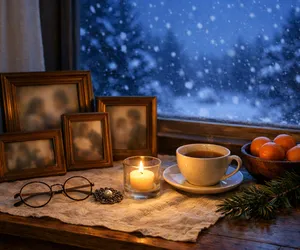
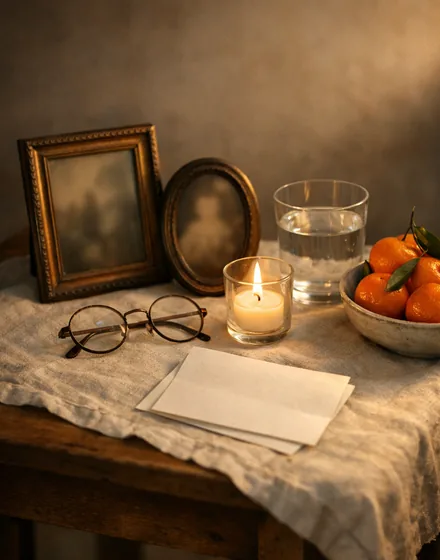
You don't need an elaborate altar. A corner of a table is enough, as long as it's set aside for the ritual. Each element has its purpose; use what you already have at home.
1. A dedicated corner: the lineage table 🪵
What it does: marks the threshold · set up that evening · cleared the next day
A small table, a cleared shelf, the corner of a dresser: lay a clean cloth on it, preferably a plain one. That simple piece of fabric changes what the spot means. It says "tonight, we're receiving guests here." In China, Dongzhi offerings are placed before the family altar and the ancestral tablets; at home, a foot or so of space can play the same role. If you can, set it near a window, facing the night.
2. A photo or a family heirloom 🖼️
What it does: brings presence · one to three pieces, no more
A photo of a grandmother, a wedding ring, a brooch, a recipe in her handwriting, a garden tool: an object that belonged to someone in your lineage carries their presence better than any speech. If you have nothing, or don't know your ancestors, write your family name or the name of the region you come from on a folded slip of paper. What matters is the bond, not the value of the object.
3. A light that keeps watch ✨
What it does: lights the way · kept on for the whole ritual
A candle, a night-light or a small lamp with a warm glow. In old Norway, people left lights burning on Christmas night for the dead who came back to visit their homes. Here, the light isn't for a wish: it watches over the space and signals to the people you're calling. Never leave a flame unattended; an LED candle works perfectly if you'd like to keep a light on after the ritual.
4. A simple offering 🍊
What it does: shares · water, fruit or a portion of the meal
A glass of clear water, a cup of tea, a few clementines, a slice of a grandfather's favorite cake: the offering is about sharing, not sacrifice. At Dongzhi, Chinese families present dumplings and cooked dishes to their ancestors, and Norwegian tradition left the holiday meal on the table for the night's visitors. The next day, pour the water at the foot of a plant or a tree, and eat the fruit together as a family.
5. The list of names 📜
What it does: names · ancestors by blood, ancestors of the heart, guides
Before the ritual, take a sheet of paper and draw three columns. On the left, your ancestors by blood: parents, grandparents, as far back as your memory and your family's go. In the middle, your ancestors of the heart: a godmother, a teacher, a neighbor who taught you something essential. On the right, your guides: your guardian angel, a presence you feel, or simply "my guides" if you don't know their names. First names are enough, and so is "the woman who taught me to sew."
✦














Did you like this article?
Want to know more 🤔 ?
Write directly to the authorMadisonCarter !
Ask Madison a question